Introduction
Backlinks remain one of the strongest signals search engines use to evaluate a website’s authority, but not every backlink helps your rankings. A single link from a trusted, relevant website can deliver more SEO value than dozens of links from low-quality sources. That is why choosing the right website is just as important as earning the backlink itself. This guide explains how to identify websites that strengthen your SEO, improve topical authority, and support long-term organic growth. You’ll also learn which metrics matter most before investing time in link-building opportunities.
Why Choosing the Quality Website for Backlinks Is Important
Search engines evaluate backlinks based on quality, relevance, and trust rather than quantity alone. According to Google, links are one of the many ranking factors that help its systems understand the credibility of web pages. A backlink from a respected website in your niche can improve search visibility, referral traffic, and brand authority, while links from spammy or irrelevant sites may provide little value or even create SEO risks. Selecting high-quality backlink sources ensures every link contributes to sustainable rankings and a stronger online reputation over time.
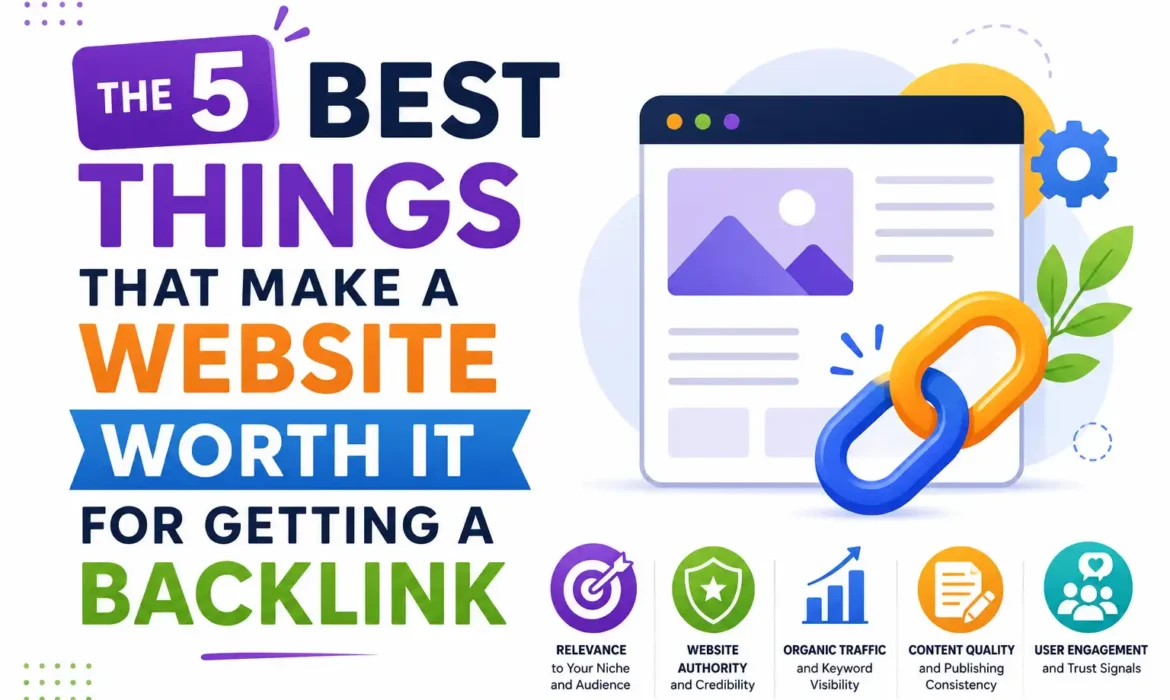
5 Best Things That Make a Website Worth It for Getting a Backlink
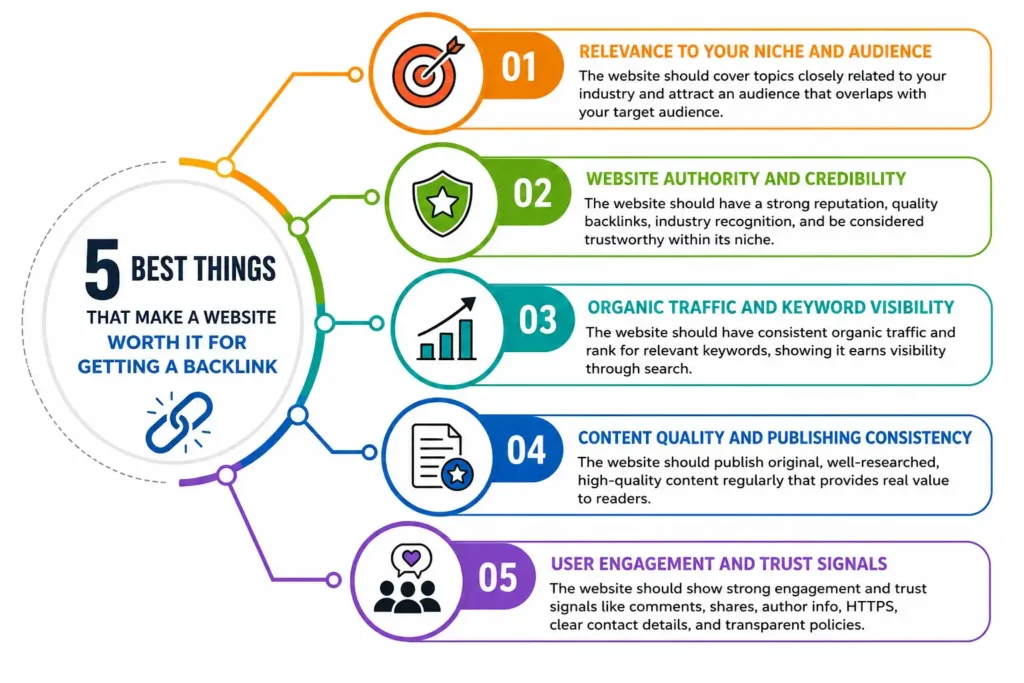
Relevance to Your Niche and Audience
A backlink delivers the greatest SEO value when it comes from a website covering topics closely related to your industry. Search engines use contextual relevance to understand why a link exists. If your audience naturally overlaps with the referring site’s readers, the backlink is more likely to improve rankings while driving qualified referral traffic that converts into real visitors or customers.
Website Authority and Credibility
Authority reflects how trustworthy and respected a website appears within its niche. Look beyond a single metric by evaluating brand reputation, editorial quality, backlinks, and industry recognition. Websites consistently referenced by reputable publications and businesses generally pass stronger trust signals, making backlinks from them more valuable for long-term SEO performance and brand credibility.
Organic Traffic and Keyword Visibility
Healthy organic traffic shows that a website earns visibility through search rather than relying solely on paid promotion. Analyze whether traffic has remained stable over time and whether the site ranks for relevant keywords. Consistent keyword visibility indicates search engines trust the content, increasing the likelihood that backlinks from the website will provide meaningful SEO benefits.
Content Quality and Publishing Consistency
High-quality websites publish original, well-researched content that solves readers’ problems instead of chasing keywords alone. Review recent articles for accuracy, readability, and depth. A consistent publishing schedule also signals an active website that continues attracting users and search engine attention, helping your backlinks remain valuable over the long term.
User Engagement and Trust Signals
Strong engagement often indicates that readers find the website helpful and credible. Look for meaningful comments, active social sharing, author profiles, secure HTTPS connections, clear contact information, and transparent editorial policies. These trust signals suggest the website serves real users instead of existing only to sell backlinks, making it a safer and more valuable linking opportunity.
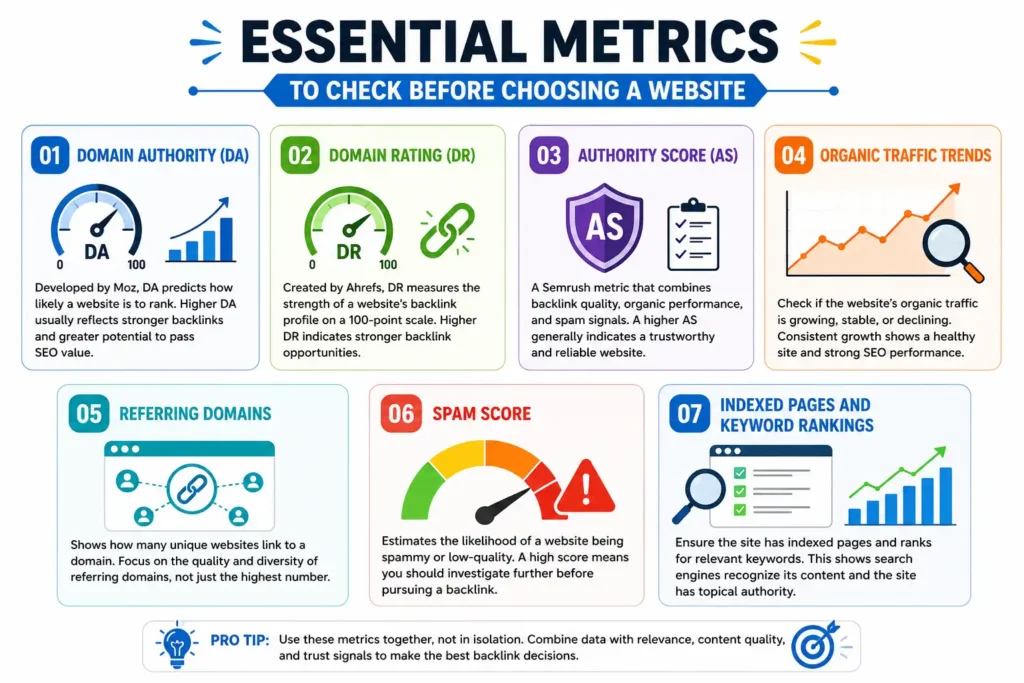
Essential Metrics to Check Before Choosing a Website
Domain Authority (DA)
Domain Authority, developed by Moz, predicts how likely a website is to rank compared with other domains. Although Google does not use DA as a ranking factor, it remains a useful comparative metric. Higher DA often reflects stronger backlinks, established authority, and greater potential to pass SEO value through quality backlinks.
Domain Rating (DR)
DR focuses primarily on backlink quality and quantity rather than content performance. Comparing DR among competing websites helps identify stronger backlink opportunities, especially when combined with traffic, relevance, and editorial quality.
Authority Score (AS)
Authority Score is Semrush’s proprietary metric that combines backlink quality, organic search performance, and spam indicators into a single evaluation. A healthy Authority Score generally suggests a trustworthy website with sustainable SEO performance. Use it alongside other metrics instead of relying on it as your only decision-making factor.
Organic Traffic Trends
Reviewing traffic trends reveals whether a website is growing, stable, or losing search visibility. Consistent organic growth usually reflects quality content and strong SEO practices, while sudden traffic declines may indicate algorithm penalties or reduced relevance. Always analyze historical traffic instead of relying on a single monthly traffic estimate.
Referring Domains
The number of referring domains shows how many unique websites link to a domain. A diverse backlink profile from reputable websites is generally more valuable than thousands of links from only a few sources. Focus on the quality and diversity of referring domains rather than simply pursuing the highest number.
Spam Score
Spam Score estimates the likelihood that a website demonstrates characteristics commonly associated with low-quality or manipulative websites. A high score does not automatically mean a website is harmful, but it should encourage further investigation. Review the site’s content, backlinks, and overall credibility before considering any backlink opportunity.
Indexed Pages and Keyword Rankings
A healthy website should have important pages indexed and rank for relevant search queries. Checking indexed pages confirms that search engines recognize the site’s content, while keyword rankings demonstrate topical authority and visibility. Strong indexing combined with consistent keyword performance usually indicates a trustworthy website worth considering for backlinks.
How to Evaluate Website Quality Like an SEO Expert
Experienced SEO professionals never judge a website by a single metric like Domain Authority or Domain Rating. Instead, they evaluate multiple quality signals to determine whether a backlink will provide long-term SEO value. This includes analyzing backlinks, content quality, topical relevance, user experience, and overall website credibility. Google’s ranking systems reward websites that demonstrate expertise, trust, and helpful content. By following a structured evaluation process, you can avoid risky backlink sources and focus your efforts on websites that genuinely strengthen your search visibility and authority.
Analyze the Site’s Backlink Profile
A strong backlink profile contains links from reputable, relevant websites rather than thousands of low-quality domains. Use tools like Ahrefs or Semrush to review referring domains, anchor text diversity, and link growth trends. Natural backlinks from trusted publications, industry blogs, and authoritative resources indicate that the website has earned credibility instead of manipulating search rankings.
Review Content Originality and Depth
Quality websites publish original content that provides real value instead of rewriting existing articles or relying entirely on AI-generated text. Review several recent posts for research, practical insights, updated information, and clear structure. Comprehensive content demonstrates expertise, improves user satisfaction, and increases the likelihood that search engines trust the website.
Check Topical Authority
Topical authority measures how comprehensively a website covers a specific subject. Instead of publishing random topics, authoritative websites build clusters of related content around their niche. Search engines better understand their expertise, making backlinks from these sites more valuable. Consistent coverage also attracts readers genuinely interested in your industry.
Examine Internal Linking Structure
A well-planned internal linking strategy helps search engines understand website architecture while guiding users to relevant content. Quality websites naturally connect related articles, important service pages, and cornerstone resources. Logical internal links improve crawling, distribute page authority efficiently, and demonstrate that the website follows sound SEO best practices.
Evaluate User Experience and Page Speed
User experience directly affects visitor engagement and website credibility. Check whether pages load quickly, display correctly on mobile devices, and offer simple navigation. Google’s Core Web Vitals emphasize performance, responsiveness, and visual stability. A fast, user-friendly website typically retains visitors longer and signals higher overall quality.
Identify Signs of a Real Business or Brand
Trustworthy websites usually represent genuine businesses, organizations, or established brands. Look for detailed About pages, author profiles, contact information, social media presence, privacy policies, and customer testimonials. These trust signals show accountability and transparency, making backlinks from the website significantly safer and more valuable.
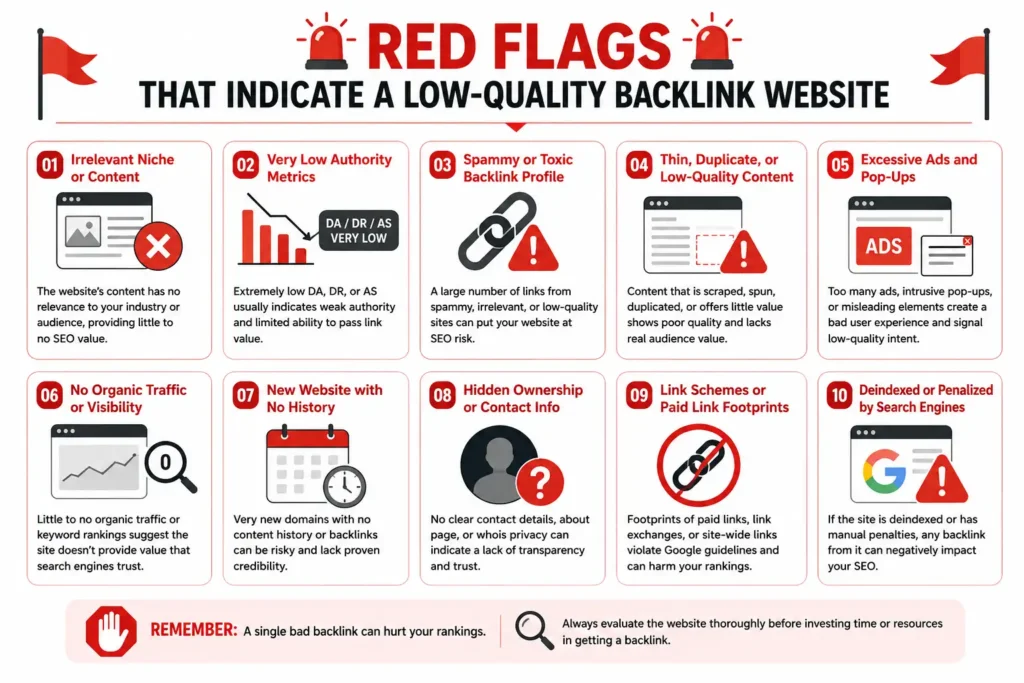
Red Flags That Indicate a Low-Quality Backlink Website
High Spam Score
A high Spam Score suggests that a website shares characteristics commonly associated with low-quality domains. While the score alone should not determine your decision, it deserves further investigation. Review the website’s backlinks, content quality, and reputation before building links, especially if several warning signs appear together.
Thin, AI-Generated, or Duplicate Content
Websites filled with shallow articles, copied content, or poorly edited AI-generated text rarely provide lasting SEO value. Search engines prioritize helpful, original content created for users. If most pages lack depth, unique insights, or factual accuracy, the website is unlikely to be a worthwhile backlink source.
Excessive Outbound Links
Pages overloaded with external links often indicate that the website exists primarily for link selling. When every article links to dozens of unrelated websites, the value passed through each backlink decreases. Editorially placed links within useful content are generally far more beneficial than excessive promotional linking.
Irrelevant Niche or Mixed-Topic Websites
A website covering unrelated topics such as finance, health, travel, gambling, and technology without clear expertise often lacks topical focus. Search engines value contextual relevance, so backlinks from mixed-topic websites usually carry less authority. Prioritize websites that consistently publish content related to your industry and audience.
Paid Link Farms and Private Blog Networks (PBNs)
Link farms and Private Blog Networks are built primarily to manipulate search rankings by exchanging or selling backlinks. These networks usually share weak content, unnatural linking patterns, and limited user engagement. Google’s spam policies target manipulative link schemes, making backlinks from these websites a significant SEO risk.
Sudden Traffic Drops or Deindexed Pages
A sharp decline in organic traffic may indicate algorithm updates, manual penalties, or technical issues affecting search visibility. Likewise, pages disappearing from Google’s index suggest serious quality concerns. Always review historical traffic trends and indexed pages before investing time or resources into acquiring backlinks from any website.
Best Types of Websites to Get High-Quality Backlinks From
The strongest backlinks come from websites that have earned trust, authority, and relevance within their industries. Instead of chasing links from any available source, focus on websites that naturally align with your business and audience. Quality backlinks from reputable publications, organizations, and industry resources improve both search visibility and brand credibility. The following website categories consistently provide some of the most valuable backlink opportunities when earned through helpful content, genuine relationships, and editorial standards.
Industry Blogs
Industry blogs attract readers already interested in your niche, making them excellent backlink opportunities. Guest posts, expert contributions, and resource mentions on respected blogs provide contextual relevance while introducing your brand to a targeted audience. These backlinks often deliver both SEO value and qualified referral traffic.
News and Media Websites
Backlinks from reputable news and media websites strengthen authority because they typically follow strict editorial guidelines. Earning these links through original research, expert commentary, case studies, or company announcements can significantly improve brand credibility while exposing your business to a much broader audience.
Business Directories
Reputable business directories help search engines verify your company’s legitimacy and improve online visibility. Focus on trusted, industry-specific directories rather than submitting your website everywhere. Accurate business information, consistent contact details, and relevant listings contribute more value than hundreds of low-quality directory submissions.
Resource Pages
Resource pages are designed to recommend valuable tools, guides, and educational content. If your website offers genuinely useful information, these pages can provide highly relevant editorial backlinks. Because they exist to help users, resource page links often carry strong contextual value and long-term SEO benefits.
Educational (.edu) Websites
Educational websites often publish research, learning resources, scholarship pages, and industry references trusted by students and professionals. While the “.edu” extension alone does not increase ranking power, relevant backlinks from authoritative educational websites can significantly strengthen your website’s credibility and topical trust.
Government (.gov) Websites
Government websites are generally trusted because they publish official information and maintain high editorial standards. Although earning backlinks from these websites is challenging, they can be valuable when your business contributes public resources, research, educational materials, or community-focused initiatives relevant to government organizations.
SaaS and Business Partner Websites
Partnerships with software providers, vendors, and complementary businesses often create natural backlink opportunities. Customer success stories, integration pages, testimonials, and partner directories generate highly relevant editorial links. These backlinks not only improve SEO but also strengthen business relationships and referral opportunities within your industry.
Community and Association Websites
Professional associations, nonprofit organizations, local business groups, and industry communities often maintain trusted member directories and educational resources. Participating in these communities can earn valuable backlinks while increasing brand visibility. Because these websites serve real audiences, their backlinks frequently provide both SEO authority and meaningful referral traffic.
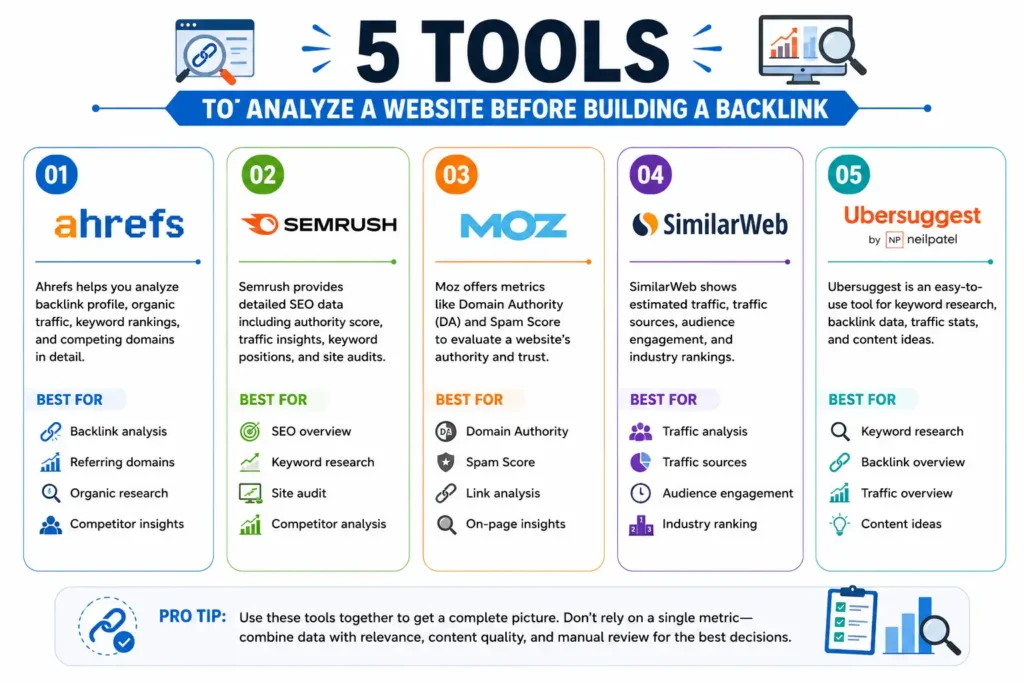
5 Tools to Analyze a Website Before Building a Backlink
Ahrefs
Ahrefs is one of the most trusted SEO platforms for backlink analysis. It provides Domain Rating (DR), referring domains, anchor text distribution, organic keywords, and historical link growth. Its extensive backlink database helps identify authoritative websites, analyze competitors, and discover high-quality link-building opportunities with confidence.
Semrush
Semrush offers a complete SEO toolkit that combines Authority Score, backlink analysis, keyword rankings, traffic estimates, and competitive research. It also identifies toxic backlinks and monitors domain performance over time. Using multiple reports together helps you evaluate whether a website is genuinely worth targeting for backlinks.
Moz
Moz is well known for introducing Domain Authority (DA), one of the industry’s most recognized comparative metrics. Besides DA, it offers Spam Score, keyword tracking, and backlink analysis. While Google does not use DA directly, Moz remains a valuable tool for comparing website authority across similar competitors.
Majestic
Majestic specializes in backlink intelligence through proprietary metrics such as Trust Flow and Citation Flow. Trust Flow measures the quality of backlinks, while Citation Flow evaluates link quantity. Reviewing both metrics together helps determine whether a website has earned natural authority or relies on excessive low-quality links.
Google Search Operators
Google Search operators help you discover backlink opportunities without paid tools. Commands like site:, intitle:, inurl:, and quotation marks allow you to find guest posting websites, resource pages, niche blogs, and competitor mentions. They remain a simple yet highly effective method for backlink prospecting.
Google Search Console (For Your Own Website)
Google Search Console provides first-party data about your website’s backlinks, indexed pages, search performance, and referring domains. Although it does not analyze competitor websites, it helps monitor your existing backlink profile, identify top linking pages, and detect indexing issues that may affect SEO performance.
Similarweb
Similarweb estimates website traffic, audience demographics, engagement metrics, and traffic sources. It helps verify whether visitors come from organic search, direct traffic, social media, or paid campaigns. Combining Similarweb data with traditional SEO metrics creates a more complete evaluation before pursuing backlink opportunities.
Step-by-Step Process to Choose the Best Website for Backlinks
Define Your Backlink Goals
Start by identifying what you want each backlink to accomplish. Your objective may be improving keyword rankings, increasing referral traffic, strengthening topical authority, or building brand awareness. Clear goals help you prioritize the right websites instead of pursuing backlinks that provide little strategic value.
Find Relevant Websites in Your Niche
Search for websites that regularly publish content related to your products, services, or industry. Relevant websites provide stronger contextual signals and attract audiences genuinely interested in your expertise. Industry blogs, resource pages, associations, and trusted publications usually offer the most valuable backlink opportunities.
Evaluate SEO Metrics
Review important SEO metrics such as Domain Authority, Domain Rating, Authority Score, referring domains, organic keywords, and Spam Score. These indicators help compare websites objectively. However, always combine multiple metrics rather than relying on a single number to determine backlink quality.
Analyze Traffic Quality
Traffic volume alone does not guarantee a valuable backlink. Review where visitors come from, whether organic traffic remains stable, and if the website ranks for relevant keywords. Consistent search visibility and engaged visitors indicate healthier websites than domains relying mainly on paid or temporary traffic sources.
Review Backlink Opportunities
Examine how the website typically links to external resources. Editorial mentions, guest posts, resource pages, expert interviews, and partnership pages often provide stronger backlinks than promotional directories. Choose opportunities where your content naturally fits the audience and adds genuine value.
Check Editorial Standards
High-quality websites maintain clear editorial guidelines and publish accurate, well-researched content. Review grammar, formatting, fact-checking, author profiles, and publishing consistency. Strong editorial standards indicate that backlinks are earned based on content quality rather than simply purchased or exchanged.
Prioritize Quality Over Quantity
A handful of authoritative, relevant backlinks usually outperform hundreds of low-quality links. Google’s ranking systems reward natural link profiles built through valuable content and genuine recommendations. Focus on earning backlinks that strengthen your website’s authority rather than simply increasing your backlink count.
Frequently Asked Questions
What Is a Good Domain Authority for Backlinks?
There is no universal minimum Domain Authority for valuable backlinks. Generally, websites with a DA above 40 are considered relatively strong, but relevance and content quality matter far more than the score itself. A highly relevant website with moderate authority can provide greater SEO value than an unrelated website with a much higher DA.
Is Website Traffic More Important Than DA or DR?
Neither metric should be evaluated alone. Healthy organic traffic indicates that a website performs well in search results, while DA and DR estimate authority based on backlinks. The best backlink opportunities combine relevant content, consistent traffic, strong authority, and genuine user engagement.
How Can I Identify a Spammy Website?
Review multiple warning signs instead of relying only on Spam Score. Thin content, excessive outbound links, poor design, irrelevant topics, unnatural backlink profiles, and sudden traffic declines often indicate a low-quality website. Using tools like Ahrefs, Semrush, and Moz makes identifying these risks much easier.
Are Paid Backlinks Worth It?
Paying for backlinks solely to manipulate search rankings violates Google’s Search Essentials. While sponsored partnerships and advertisements are legitimate when properly disclosed, buying editorial backlinks for SEO carries significant risk. Focus on earning backlinks through valuable content, digital PR, and genuine industry relationships instead.
How Many Backlinks Should a Website Have?
There is no ideal number of backlinks because every industry and website is different. A smaller website with relevant, high-quality backlinks can outperform competitors with thousands of low-value links. Building a natural backlink profile should always take priority over reaching a specific backlink count.
Which Tools Are Best for Checking Backlink Quality?
The most reliable backlink analysis tools include Ahrefs, Semrush, Moz, Majestic, Google Search Console, and Similarweb. Each platform measures different aspects of website quality, so combining insights from several tools provides the most accurate evaluation before pursuing backlink opportunities.
Can a Backlink From a Low-Authority Website Still Be Valuable?
Yes. A backlink from a low-authority website can still provide value if the website is highly relevant, publishes quality content, attracts genuine visitors, and serves your target audience. Relevance, editorial placement, and trust often outweigh raw authority metrics in many situations.
How Often Should I Evaluate Backlink Sources?
Review backlink sources regularly because website quality can change over time. Conducting a backlink audit every three to six months helps identify declining websites, spam risks, and new opportunities. Frequent monitoring also ensures your backlink profile remains healthy and aligned with current SEO best practices.
Conclusion
Building high-quality backlinks starts with choosing the right websites, not simply collecting more links. By evaluating relevance, authority, content quality, organic traffic, backlink profiles, and trust signals, you can identify websites that genuinely strengthen your SEO strategy. Using trusted tools such as Ahrefs, Semrush, Moz, Majestic, Google Search Console, and Similarweb makes the evaluation process more accurate and data-driven. Remember that long-term SEO success comes from earning natural, editorial backlinks from credible websites that provide real value to users. When quality becomes your priority, every backlink contributes to stronger rankings, greater brand authority, and sustainable organic growth.
🚀 Grow your website with smarter SEO strategies. Follow True Linkers.