
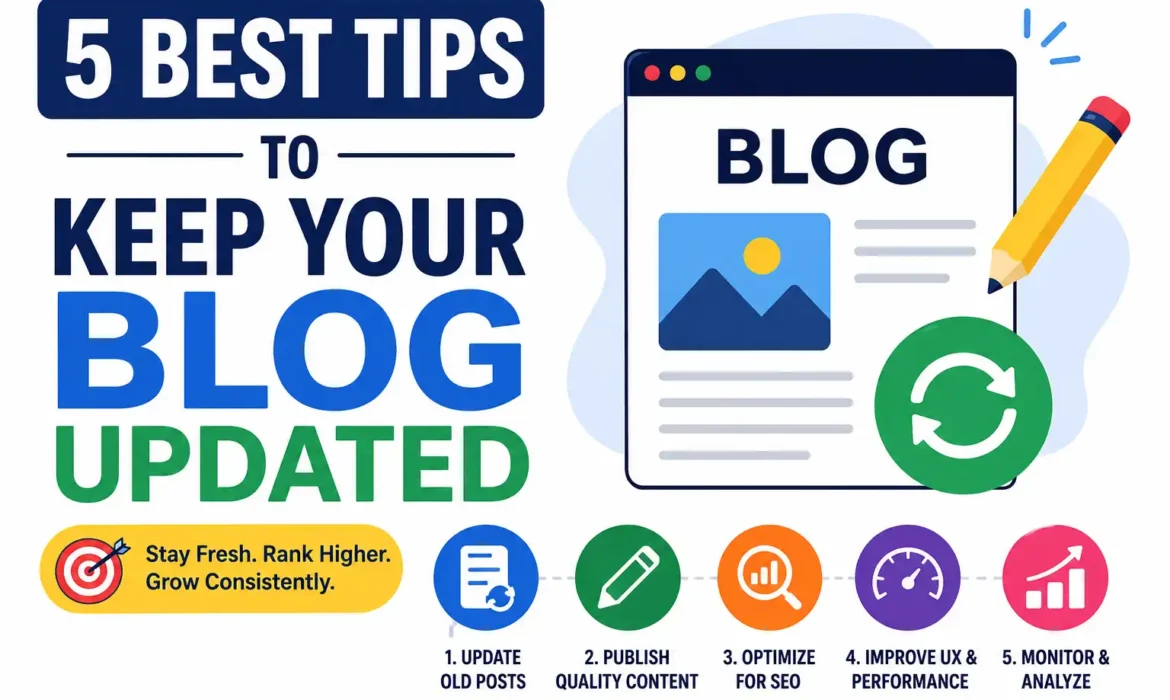
Why Keeping Your Blog Updated Matters
Publishing a blog post is only the beginning. Search engines and readers both expect content to stay accurate, relevant, and helpful over time. Updating your blog improves content quality, fixes outdated information, and aligns your pages with current search intent. According to Google, its ranking systems prioritize content that demonstrates experience, expertise, authoritativeness, and trustworthiness (E-E-A-T), making freshness important when topics change. Regular updates can also improve click-through rates, reduce bounce rates, and increase organic visibility. A well-maintained blog builds credibility, keeps visitors engaged longer, and creates more opportunities to earn backlinks and higher search rankings.
5 Best Tips to Keep Your Blog Updated
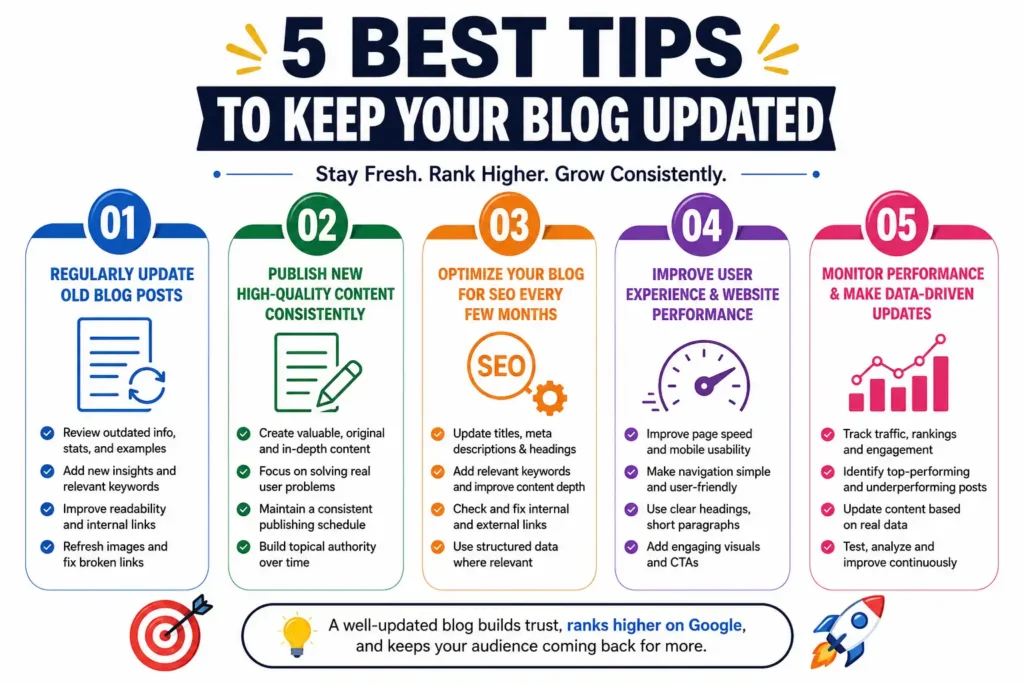
Tip #1: Regularly Update Old Blog Posts
One of the fastest ways to grow organic traffic is by refreshing existing content instead of constantly creating new articles. Review older posts after every 6 to 12 months and update new statistics, fix broken links, screenshots, examples, and recommendations. Add newly discovered keywords, answer emerging search queries, and improve readability with clearer formatting. Research from multiple SEO industry studies has shown that refreshed content often regains lost rankings and attracts new visitors. Keeping evergreen articles current signals reliability to readers while helping search engines understand that your content continues to provide accurate and valuable information.
Tip #2: Publish New High-Quality Content Consistently
Updating old content is essential, but publishing fresh, valuable articles remains equally important for long-term growth. Consistency helps search engines crawl your website more frequently while giving readers new reasons to return. Focus on solving real problems instead of chasing every trending keyword. Build topical authority by covering related subjects in depth and linking articles together naturally. Original research, expert insights, case studies, and practical examples make your content stand out. A realistic publishing schedule that prioritizes quality over quantity delivers better SEO results than posting low-value articles simply to maintain frequency.
Tip #3: Optimize Your Blog for SEO Every Few Months
SEO is constantly evolving, so regular optimization keeps your blog competitive. Every few months, review title tags, meta descriptions, internal links, image alt text, heading structure, and keyword placement. Check whether search intent has changed and expand sections that competitors cover more effectively. Google’s Helpful Content guidance encourages content created primarily for people rather than search engines, making user satisfaction a critical ranking factor. Refresh structured data where appropriate, improve content depth, and remove unnecessary keyword repetition. These small improvements can significantly increase search visibility without requiring a completely new article.
Tip #4: Improve User Experience and Website Performance
Even exceptional content can lose rankings if visitors have a poor experience. Improve page loading speed, simplify navigation, optimize images, and ensure your website works perfectly on mobile devices. Google continues to emphasize page experience alongside content quality because users expect fast, accessible websites. Clear typography, logical headings, shorter paragraphs, and visible calls-to-action help readers stay engaged longer. Regularly test for broken links, layout issues, and slow-loading elements. A faster, user-friendly blog increases engagement, encourages repeat visits, reduces bounce rates, and supports stronger long-term SEO performance.
Tip #5: Monitor Performance and Make Data-Driven Updates
Successful bloggers rely on data instead of assumptions when improving their content. Monitor metrics such as organic traffic, keyword rankings, click-through rates, average engagement time, and conversions to identify pages needing attention. Use performance reports to discover declining articles, new keyword opportunities, and pages with high impressions but low clicks. Update those posts with stronger headlines, improved introductions, clearer answers, and additional value. Making informed decisions based on real user behavior allows you to prioritize high-impact updates, maximize existing content, and achieve sustainable organic growth over time.
🎯 More Helpful Guides: How to Choose a Website for Backlinks (SEO Guide)
Additional Best Practices to Keep Your Blog Fresh
Beyond updating content and publishing consistently, a few extra habits can significantly improve your blog’s long-term performance. Small improvements made regularly often produce better results than major overhauls once every few years. Refreshing visuals, expanding FAQs, repurposing content, and optimizing calls-to-action all help keep your blog engaging and relevant. These updates also improve user experience, increase time on page, and encourage conversions. Google’s helpful content systems reward pages that continue providing value, making ongoing improvements an important part of any successful content marketing and SEO strategy.
Add New Visuals, Infographics, and Videos
Visual content makes blog posts easier to understand and more enjoyable to read. Replace outdated screenshots, add custom graphics, include comparison tables, or embed short explainer videos where appropriate. Research from Wyzowl consistently shows that people prefer learning through video, while informative visuals improve engagement and readability. Fresh media also increases the likelihood of earning backlinks and social shares, keeping your content competitive.
Update FAQs Based on User Questions
Your audience constantly asks new questions through search engines, comments, emails, and social media. Review these questions regularly and expand your FAQ section with clear, direct answers. Adding relevant FAQs helps satisfy search intent, improves topical completeness, and can increase your chances of appearing in Google’s rich results. Updated FAQs also reduce user confusion and build trust by addressing real concerns.
Repurpose Blog Content Into Multiple Formats
One high-quality article can become several valuable content assets. Turn blog posts into videos, infographics, email newsletters, LinkedIn posts, social media carousels, podcasts, or downloadable checklists. Repurposing extends your content’s lifespan while reaching audiences who prefer different formats. It also strengthens brand visibility and drives additional traffic back to your original article without creating entirely new content from scratch.
Refresh Calls-to-Action to Improve Conversions
Your call-to-action should evolve as your business goals and audience needs change. Replace outdated offers, improve button copy, update internal links, and highlight your latest products or services. Test different CTA placements and messaging to improve click-through and conversion rates. A relevant, compelling CTA encourages readers to take the next step instead of leaving your website after finishing the article.
Common Mistakes That Make a Blog Outdated
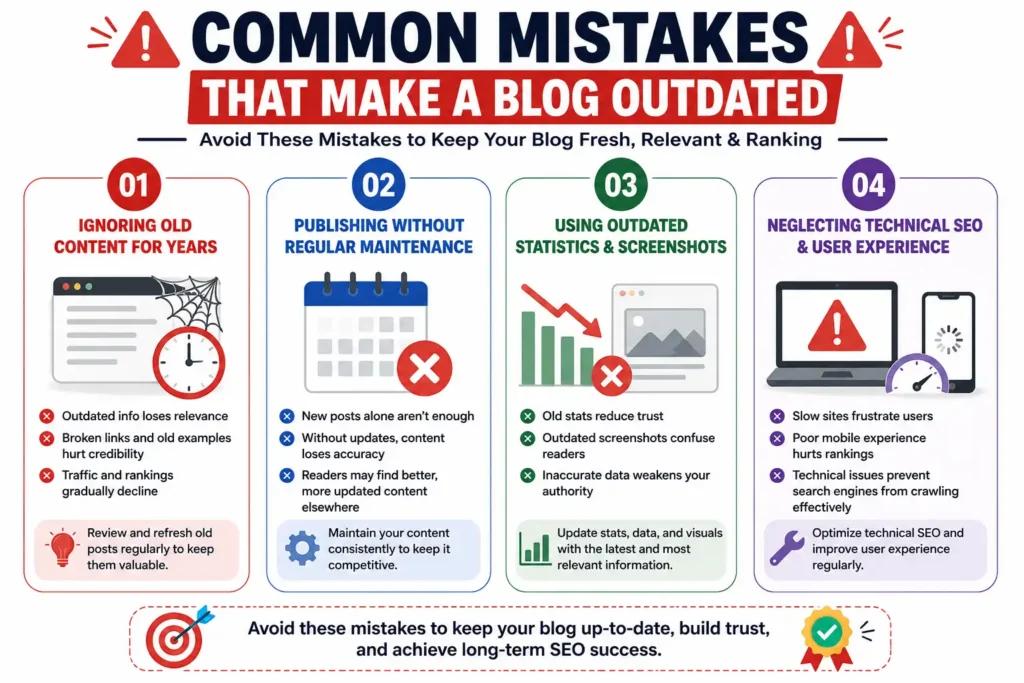
Many blogs lose traffic not because the content is poor, but because it is neglected over time. Search behavior, SEO best practices, and industry trends constantly evolve, making regular maintenance essential. Ignoring updates can reduce credibility, lower search rankings, and create a poor user experience. Identifying these common mistakes helps you protect your existing content investment while maintaining strong organic visibility. Avoiding these issues keeps your blog useful, trustworthy, and competitive in an increasingly crowded search landscape.
Ignoring Old Content for Years
Leaving articles untouched for several years often results in declining rankings and reduced traffic. Statistics become outdated, recommendations change, and broken links appear naturally over time. Schedule regular content audits to identify pages needing attention. Refreshing evergreen posts keeps them relevant and ensures readers continue receiving accurate, trustworthy information that reflects the latest industry developments.
Publishing Without Regular Maintenance
Many website owners focus only on publishing new articles while forgetting previously published content. Without ongoing maintenance, valuable posts slowly lose relevance and performance. Build a content maintenance schedule that includes updating links, correcting outdated information, improving formatting, and optimizing for changing search intent.
Using Outdated Statistics and Screenshots
Nothing reduces credibility faster than obsolete data or screenshots from outdated software versions. Readers expect current information they can trust when making decisions. Replace old statistics with figures from reputable organizations, update images that no longer match modern interfaces, and verify every external reference. Accurate information strengthens authority and improves your content’s overall trustworthiness.
Neglecting Technical SEO and User Experience
Strong content cannot fully succeed if technical problems frustrate users or prevent efficient crawling. Slow page speed, broken links, poor mobile usability, and confusing navigation all reduce engagement. Regular technical audits help identify these issues before they affect rankings. A fast, accessible, and user-friendly website supports both search engine visibility and a positive visitor experience.
Essential Tools to Keep Your Blog Updated Efficiently
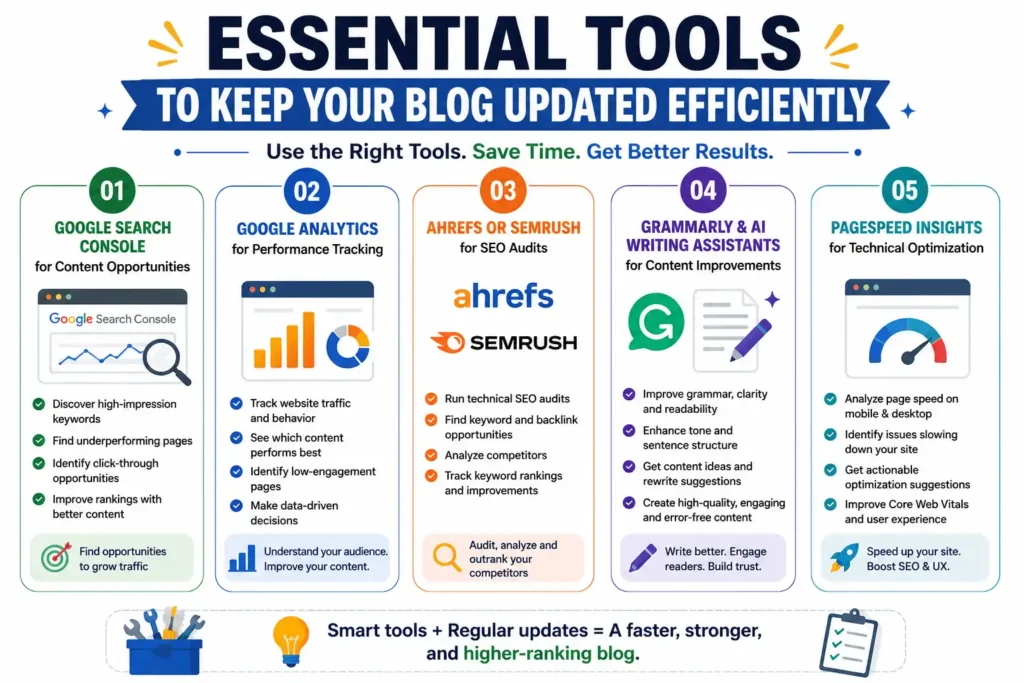
Updating a blog becomes much easier when you use the right tools. Modern SEO and analytics platforms help identify outdated content, discover keyword opportunities, monitor rankings, and improve overall performance. Instead of guessing what to update, rely on real data to prioritize changes with the greatest impact. Combining analytics, SEO auditing, writing assistance, and performance testing creates an efficient workflow that saves time while supporting sustainable organic growth. Investing in trusted tools also helps you make smarter, evidence-based content decisions.
Google Search Console for Content Opportunities
Google Search Console is one of the most valuable free SEO tools available. It shows which queries generate impressions, where pages rank, and which articles have declining performance. Use this data to update titles, improve content depth, target additional keywords, and increase click-through rates. Regularly reviewing Search Console helps uncover easy opportunities for traffic growth.
Google Analytics for Performance Tracking
Google Analytics provides valuable insights into how visitors interact with your content. Monitor engagement time, bounce rate, conversions, and traffic sources to understand what performs best. Identify pages with declining engagement and improve them through better content, stronger internal linking, or updated calls-to-action. Data-driven improvements consistently outperform decisions based on assumptions.
Ahrefs or Semrush for SEO Audits
Comprehensive SEO platforms like Ahrefs and Semrush help identify keyword gaps, backlink opportunities, broken links, technical issues, and competitor strategies. Regular site audits reveal problems before they affect rankings. These tools also track keyword performance over time, making it easier to measure the impact of your content updates and overall SEO strategy.
Grammarly and AI Writing Assistants for Content Improvements
Editing tools help maintain high writing quality while improving clarity, grammar, readability, and consistency. Grammarly catches language issues, while modern AI writing assistants help rewrite outdated sections, generate ideas, and improve content flow. Human review remains essential, but combining AI with careful editing produces more accurate, engaging, and reader-friendly articles.
PageSpeed Insights for Technical Optimization
Google PageSpeed Insights evaluates your website’s loading performance across desktop and mobile devices. It identifies issues such as oversized images, render-blocking resources, and slow server response times. Improving these technical factors enhances user experience and supports Core Web Vitals. Faster websites encourage longer visits, lower bounce rates, and stronger overall SEO performance.
Frequently Asked Questions?
How often should I update my blog?
There is no universal schedule because every website is different. As a general rule, review important evergreen articles every six to twelve months. Posts covering fast-changing topics such as technology, finance, health, or digital marketing may require more frequent updates. Monitor traffic, rankings, and industry changes to determine when content needs refreshing.
Is updating old posts are better than writing new posts?
Both strategies are valuable and should work together. Updating high-performing older content helps preserve and improve existing rankings, while publishing new articles expands your topical authority and attracts additional audiences. A balanced content strategy that refreshes evergreen posts while consistently creating new, high-quality content typically delivers the strongest long-term SEO results.
What parts of a blog post should be updated?
Focus on information that may have become outdated or incomplete. Refresh statistics, examples, screenshots, external links, internal links, keywords, headings, meta descriptions, and calls-to-action. You should also improve readability, answer newly popular search queries, and add fresh insights that increase the article’s overall value for readers and search engines.
Does Google rank updated content higher?
Google does not automatically reward content simply because it has been updated. However, meaningful improvements that make a page more accurate, comprehensive, and helpful can improve its ability to rank well. Updating content to better satisfy search intent, fix outdated information, and enhance user experience aligns with Google’s guidance for creating helpful, people-first content.
How do I know which blog posts need updating first?
Start by reviewing your analytics and SEO data. Prioritize pages with declining organic traffic, falling keyword rankings, high impressions but low click-through rates, or outdated information. Evergreen articles with strong backlink profiles are excellent candidates because updating them often produces faster SEO improvements than creating entirely new content.
Can updating old content increase website traffic?
Yes. Refreshing valuable content can improve keyword rankings, increase click-through rates, and attract more organic visitors when updates genuinely enhance the page. Many SEO professionals regularly see positive traffic growth after improving outdated articles, especially when they align the content with current search intent and add more comprehensive information.
What tools help keep a blog updated?
Several tools simplify content maintenance. Google Search Console identifies ranking opportunities, Google Analytics measures user behavior, Ahrefs and Semrush perform SEO audits, Grammarly improves writing quality, and Google PageSpeed Insights helps optimize technical performance. Using these tools together creates a data-driven workflow for maintaining a healthy, competitive blog.
Should I change the publish date after updating a blog post?
If you make substantial improvements such as adding new research, rewriting sections, updating examples, or expanding the content significantly, updating the publish or “last updated” date can be appropriate. However, avoid changing dates after making only minor edits, as transparency and accuracy help build trust with both readers and search engines.
Conclusion
Keeping your blog updated is one of the most effective ways to improve SEO, maintain credibility, and deliver lasting value to your audience. Regularly refreshing older articles, publishing high-quality content, optimizing for current search intent, improving user experience, and tracking performance all contribute to sustainable organic growth. Instead of viewing content as something you publish once and forget, treat every blog post as a long-term asset that deserves ongoing attention. With a consistent update strategy and the right tools, your blog can continue attracting readers, earning higher search rankings, and generating meaningful results for years to come.
📈 Build lasting online authority with True Linkers.